
Additional Resource Provision (ARP)
- Owls, Foxes and Otters -
Additional Resource Provisions are educational provisions within a mainstream school. Their main purpose is to support children with additional learning needs to make better, more sustained progress with the planning and learning being best suited for their particular needs. ARPs can provide specialist and targeted support for children with special educational needs (SEND), particularly trained teaching staff, as well as environments, planning and lessons being adapted to effectively support the learning, the behaviour and the social & emotional needs of each child within an ARP class. Each ARP can provide and specialise in a specific area of learning needs, so choosing which ARP can best support your child is key. Visiting different ARPs for tours can be very helpful to make this decision.
At St Michael's, we are an ARP provision based within a mainstream school, which specialises in supporting children with severe learning difficulties (SLD). We began with a small number of children being supported in one class, to now supporting 15 children daily with their learning and social and communicative development. At St Michael's we have three provisions within our school for children: Owls, Foxes and Otters. The children within these classes range in age from 4-11. Classes are organised according to developmental stage and age.
ARP opening times are 9.00am to 3.00pm
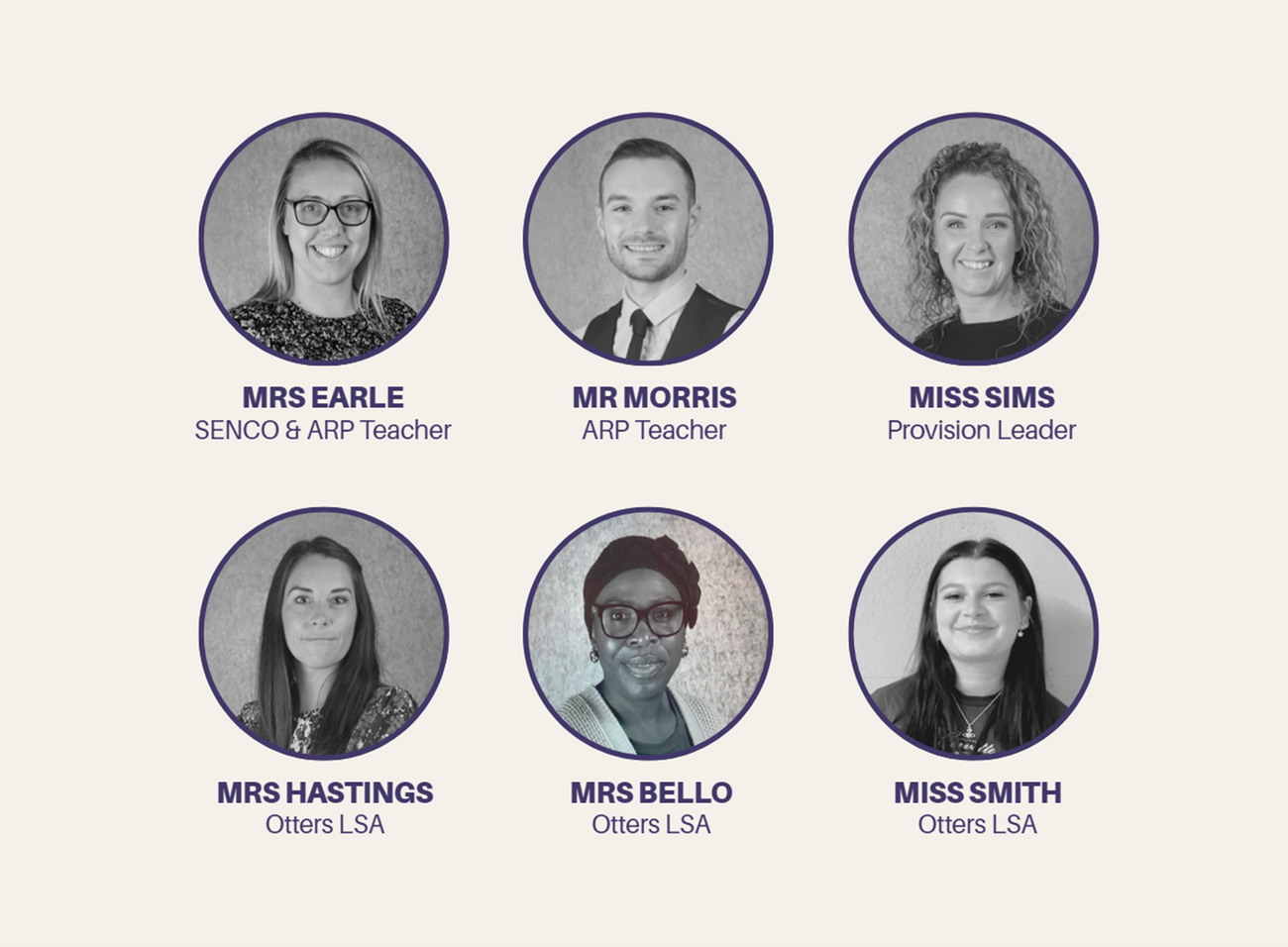
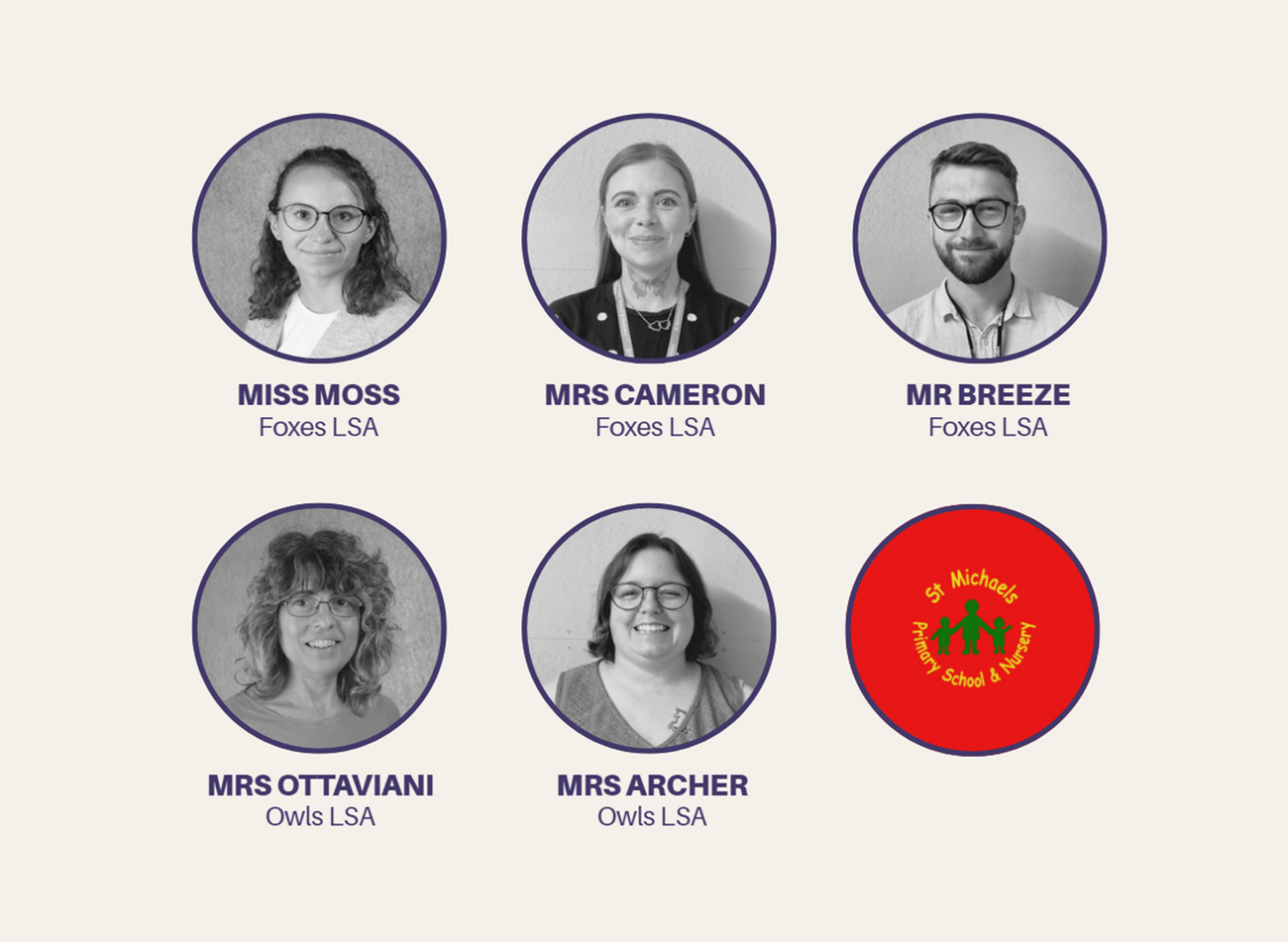
Our staff:
Our Rooms:
A Typical Day in the ARP:
Children are greeted and encouraged to be independent when coming into the classroom, putting their items away and selecting their lunch. The children have time to settle using the sensory room or selecting a resource or activity that is available.
Our morning register begins with our hello song and children select their name or photo card placing it on the visual register. We practise the days of the week and discuss the weather. This is then followed by 'squiggle whilst you wiggle' a programme that incorporates dance, music and large movements to help children develop the fine muscle control they need for writing.
Continuous provision, attention autism, snack and outdoor time all take place in the morning session before heading over to the main lunch hall with the rest of the school for lunch. Children are supervised and encouraged to develop their independence by clearing their trays before they head out to play.
Our afternoon sessions start with a sensory calming session, circle time, dough disco and a structured activity session alongside continuous provision- these sessions include life skills, wildwood, art, messy play and music.
Attention Autism:
Attention Autism supports and builds attention & listening skills at an appropriate developmental level. It also supports and develops children's social communication skills, such as taking turns or using vocalisations.
The approach works because it draws on the child’s strengths:
Stronger visual skills than auditory skills
Remembering experiences with emotional impact (activities aim to be memorable and enjoyable)
Ability to follow logic and structure (e.g. following a predictable pattern, use of simple, repetitive language).
Stage 1: FOCUS- The Bucket
The aims are for the child to...
· Focus their attention on the adult led activity
· Engage their attention with enthusiasm
· Relax and enjoy these times
· To anticipate shared good times
Stage 2: SUSTAIN- The attention builder
We offer an activity that has a sequence building to a final fantastic experience. This can be long or short depending on attention levels.
Stage 3: SHIFT- Interactive game
Once the children are attending to an adult led activity for a longer period, it is time to begin model turn-taking skills and how to shift attention from self to the rest of the group.
Stage 4: 1, 2 & 3 TRANSITIONS- Table top activity
Once they have reached stage 4, it is time to practise attending to a self-led activity. The children watch a demonstration of the activity carried out by an adult, take their pack of resources, go to their own space and carry out the activity independently. The focus is on the progress and attention rather than the end result. The children then come back together and share in celebrating the end result!
In our ARP, we use the Attention Bucket sessions to support the children’s concentration, engagement and listening skills.
These sessions also give the children opportunities to explore a wide range of themes, events and celebrations throughout the year, alongside our main topic of Toys.
During Autumn 1, our Attention Bucket sessions have focused on Harvest, Diwali and Halloween, giving the children the chance to experience seasonal traditions through exciting, visually engaging activities. Alongside these celebrations, we have also explored a variety of play-based themes such as puzzles, musical instruments, construction, and toy play, helping to develop problem-solving, turn-taking and imaginative thinking.
These sessions have provided rich opportunities for sensory exploration, communication and shared attention, supporting the children’s learning in meaningful and engaging ways.
English:
Throughout our learning in English, the children take part in a rich variety of creative, sensory and literacy-based experiences designed to bring the stories they are learning to life. Throughout each unit, we explore our stories in imaginative ways that help to inspire, both our artwork and early writing.
In Autumn 1, our learning has focussed on the story ‘Little Red Riding Hood’.
The children enjoyed:
• Designing and decorating their own red cloaks using paint and glitter.
• Creating spine poetry inspired by Little Red Riding Hood and the wolf.
• Packing their own picnic baskets with carefully chosen items to deliver to Grandma.
• Going on an adventure around the school, mirroring Little Red’s journey through the forest.
• Chopping playdough “logs” just like the woodcutter, supporting fine motor development.
• Making playdough models of the characters, exploring shape and storytelling.
• Roleplaying the story using masks in our ‘Wildwood’ area and retelling it through small-world play.
• Painting character portraits, focusing on expression and colour.
• Exploring the concept of safety by building their own indoor dens as safe spaces.
In Autumn 2, our learning has focussed on the story ‘We’re Going On A Bear Hunt’.
The children enjoyed:
• Exploring a sensory box filled with story related feely items.
• Writing sensory poetry inspired by the feeling of each scene change in ‘We’re Going On A Bear Hunt’.
• Creating stick puppets of the characters in the story.
• Designing our own welly boots which we could take on our own adventure.
• Sponge painting a river scene, inspired by the river crossing in our story.
• Exploring our own dark cave with torches to find a sleeping teddy bear.
• Creating our own maps of the journey using key vocabulary and feely items.
• Creating bottles using glitter, baby oil and water.
• Exploring various messy tuff trays inspired by the scenes in our story.
To finish each unit, Otters class brought all their learning together by writing their own five-sentence versions of the story, creating simplified retellings inspired by the original text and showcasing their growing confidence in early writing.
Maths:
Across our ARP, the children have been engaging in a wide range of practical, sensory and play-based maths activities tailored to their developmental stages.
In Owls, the children have been building their early understanding of shape through puzzles, posting activities and interactive toys. They have explored filling and emptying containers using both their hands and a variety of tools, helping to develop early problem-solving and motor skills. They have also experimented with creating lines and towers using Duplo, Lego, straws and textured walking tiles, supporting their awareness of pattern, balance and spatial relationships. They have also explored the concepts of big and small by comparing the contrasting sizes of related items e.g. balls and teddies.
In Foxes, the children have been developing their understanding of the concept of “one” and practising one-to-one correspondence by carefully distributing up to six items. Through these activities, they have explored the ideas of one more and one less, matched numerals to groups of objects, paired quantities with picture representations, and independently found specific numbers of items. Alongside this, the children have worked hard to match two identical objects and, later, to match objects to their corresponding 2D representations. They have also explored creating simple patterns using both movements and a range of objects, as well as developing their understanding of the concepts of big and small. Each session has also included focused number formation practise, supporting the children to grow in confidence when writing numerals.
In Otters, the children have been strengthening their counting skills by counting forwards and backwards from 20 through tower building, block play and sensory-based activities. They have been identifying and writing numbers to 20, finding one more and one less within 20, and beginning to explore the concepts of add, subtract and equals. The children have also developed their understanding of ordinal numbers through exciting race-based challenges. Alongside this, Otters explored the value of coins up to 10p, learning to recognise and compare different coins through practical, hands-on activities. They have created, recreated and continued patterns using both objects and movements, developing their ability to recognise and predict repeating sequences. The children have further extended their learning by ordering objects and people by height, matching identical objects, matching objects to their corresponding 2D representations, and sorting items by colour. Through these varied and engaging activities, the children have continued to build strong early mathematical understanding and confidence.
Topic:
In the ARP this term, our topic has been Toys.
Throughout the Autumn term, the children have taken part in a wide range of art and sensory based learning experiences linked to this theme. We have explored a variety of toys, both old and new, to help the children understand how toys have changed over time and to spark their curiosity through hands-on discovery.
As part of our learning, the children have:
-
Designed their own toys, carefully considering colours, shapes and features.
-
Enjoyed a teddy bears’ picnic, supporting the development of communication and social interaction skills.
-
Created their own small-world play areas, including a train track, dinosaur land, a farm and a construction site, encouraging imaginative play and collaboration.
-
Made their own playdough and pinwheels, strengthening fine motor skills while exploring creativity and imaginative play.
-
Created sponge-paint poppies and handprint poppies, exploring a range of materials and artistic techniques.
-
Explored colour, texture and pattern through PVA glue and glitter firework artwork.
-
Developed cutting skills by creating their own snowflake decorations with increasing control and precision.
-
Used fine motor skills to create fingerprint Christmas light artwork.
-
Designed and made their own Christmas baubles and cards, showing pride and independence in their work.
-
Made their own kites and flew them outdoors, exploring movement and the effects of wind.
-
Explored scientific concepts including magnetism, light, sinking and floating, and simple circuits through hands-on investigations that encouraged curiosity and questioning.
We have also produced lots of creative artwork inspired by play, using toys as tools for mark-making. The children particularly enjoyed car wheel track painting, animal footprint art, and block/Lego printing, which encouraged experimentation and exploration through sensory experiences.
It has been a wonderful start to the year, full of play, creativity and hands-on learning.
PECS
The Picture Exchange Communication System®, or PECS®, allows people with little or no communication abilities to communicate using pictures. People using PECS are taught to approach another person and give them a picture of a desired item in exchange for that item. By doing so, the person is able to initiate communication. A child with autism can use PECS to communicate a request, a thought, or anything that can reasonably be displayed or symbolized on a picture card. PECS works well in the home or in the classroom.
